
 +86-18343147735





0102030405
Never Guess Your Water Quality Again With This Test Kit
2025-10-15
The Taylor K-2005 is a reliable and comprehensive water test kit for pool owners. It offers superior accuracy over test strips. This kit provides precise control using proven DPD reagent technology. It empowers users with accurate data for five critical water balance parameters. This prevents common issues like cloudy water and skin rashes before they start. While it is an excellent Water Reagent Test Kit For Drinking Water, Swimming Pool Water & Spa Water Test Kit, it is not a Water Reagent test kit For Drinking Water.
Key Takeaways
- The Taylor K-2005 kit accurately tests pool water. It measures five important chemical levels. This helps keep your pool safe and clear.
- Liquid reagents in the K-2005 kit are more accurate than test strips. This saves money on chemicals. It prevents problems like cloudy water or skin rashes.
- The K-2005 kit is for pools and spas. It is not for testing drinking water. Use a special kit for drinking water.
What Does the Taylor K-2005 Test For?
The Taylor K-2005 kit measures the five essential chemical levels for a healthy pool. Understanding these parameters helps pool owners maintain safe and clear water. This kit provides the data needed to prevent common water problems.
Free & Total Chlorine (FC & TC)
This test measures two types of chlorine. Free Chlorine (FC) is the active sanitizer that kills germs. Total Chlorine (TC) is the sum of free chlorine and combined chlorine (chloramines). For a safe pool, the FC level should be between 1.0 and 3.0 parts per million (ppm). Ideally, the TC and FC readings should be the same. A difference indicates the presence of combined chlorine.
Note: High combined chlorine levels can cause skin irritation, red eyes, and a strong chlorine smell. Low free chlorine allows harmful bacteria and algae to grow in the water.
pH and Acid/Base Demand
The pH test measures how acidic or basic the pool water is. The ideal pH range for a swimming pool is between 7.2 and 7.8. This range is important for two main reasons. First, it keeps swimmers comfortable by preventing skin and eye irritation. Second, chlorine works most effectively within this range. Incorrect pH also damages pool equipment. Acidic water with a low pH corrodes metal parts like heaters and pumps. It also etches plaster and tile surfaces.
Total Alkalinity (TA)
Total Alkalinity (TA) acts as a buffer for the pH. It measures the water's ability to resist sudden changes in pH. Stable pH is much easier to maintain when TA is in the correct range. Different pool surfaces require slightly different TA levels.
| Pool Surface | Recommended TA (ppm) |
|---|---|
| Plaster/Concrete | 80–120 ppm |
| Vinyl/Fiberglass | 100–150 ppm |
Keeping TA balanced prevents the pH from swinging too high or too low.
Calcium Hardness (CH)
Calcium Hardness (CH) measures the amount of dissolved calcium in the water. Proper CH levels protect pool surfaces and equipment.
- Low CH: Water with low calcium is aggressive. It will pull calcium from pool surfaces, causing etching on plaster and corrosion of metal parts.
- High CH: Water with high calcium can become cloudy. It also forms rough, white scale deposits on pool walls, pipes, and equipment, which can clog filters.
For vinyl-lined pools, the recommended calcium hardness range is between 150-250 ppm.
A Look Inside the K-2005 Kit
Opening the Taylor K-2005 kit reveals a collection of tools designed for precise water testing. Each component has a specific purpose. Together, they provide a complete system for managing pool and spa chemistry. The kit is organized in a sturdy blue case for easy storage and transport.
The Reagents and Comparator
The heart of the K-2005 is its set of liquid reagents and the comparator. The kit uses proven DPD chemistry to measure chlorine. This technology is a standard for monitoring sanitized water.
- R-0870 & R-0871: These reagents measure Free and Total Chlorine. The DPD indicator turns the water sample pink. The color's intensity shows the chlorine concentration.
- R-0014 & R-0015: These are for testing pH and performing the Acid/Base Demand test.
- R-0007, R-0008, R-0009: These three reagents work together for the Total Alkalinity titration test.
- R-0010, R-0011L, R-0012: These are used to determine the Calcium Hardness level.
The kit includes a clear comparator with color standards. Users match the treated water's color to these standards to get an accurate reading.
Included Accessories
The K-2005 provides several helpful accessories to ensure accurate testing. It contains a 9 mL comparator tube for chlorine and pH tests. Two larger mixing bottles are included for the Total Alkalinity and Calcium Hardness tests. A small brush is also provided. This brush helps users keep the tubes and bottles clean for uncontaminated test results.
Tip: Always rinse the comparator tube and mixing bottles with pool water before and after each test. This simple step prevents leftover chemicals from causing a false reading.
The Water Chemistry Guide
Taylor Technologies includes valuable literature with the kit. Users receive a copy of the "Pool & Spa Water Chemistry" guide. This 68-page booklet explains testing procedures and water treatment in detail. The kit also contains a Taylor Watergram. This unique circular chart helps users calculate correct water balance adjustments. These resources empower pool owners with the knowledge to act on their test results confidently.
How to Get Accurate Results Every Time
Accurate testing is the key to effective pool maintenance. The Taylor K-2005 kit provides reliable data when users follow the correct procedures. Proper technique ensures that every test reflects the true condition of the water.
Performing the Chlorine & pH Tests
These tests use the comparator for a simple color-matching process. First, a user rinses and fills the comparator tube with pool water to the 9 mL mark. Next, they add five drops of the specified reagent, cap the tube, and invert it several times to mix. The user then immediately compares the resulting color to the standards on the comparator to determine the level.
Mastering the Titration Tests
The Total Alkalinity and Calcium Hardness tests require titration. This method involves adding a reagent drop by drop until the water sample changes color. This final color change is the test's "endpoint."
- Total Alkalinity: Users add the green R-0008 indicator. The sample turns green. They then add the R-0009 reagent one drop at a time, counting each drop until the water turns red.
- Calcium Hardness: Users add the R-0011L indicator. The sample turns red. They then add the R-0012 reagent drop by drop until the water changes from red to blue.
Tips for Avoiding Common Mistakes
Simple errors can lead to inaccurate results. Following a few tips helps maintain test precision.
Pro Tip: Reagents have a one-year shelf life. Users should start each pool season with a fresh set. Store the kit in a cool, dark place, as high heat can damage the chemicals. Cloudy or discolored reagents should be replaced.
Sometimes, a chlorine level is too high for the kit to measure. This creates an off-scale reading. If this happens, the user must dilute the water sample with chlorine-free water and retest. Forgetting this step will lead to an incorrect, underestimated chlorine reading.
K-2005 vs. Test Strips: A Accuracy Showdown
Many pool owners start with test strips because they seem simple. A quick dip and color match feels easy. However, accuracy is the most important part of water testing. This is where the Taylor K-2005 kit truly shines. It provides a much clearer picture of water health compared to standard test strips.
Why Liquid Reagents Are Superior
Liquid reagents provide more precise and reliable results than test strips. While test strips are useful for a quick check, they are not dependable for detailed water balancing. Kits like the K-2005 use titration tests. Experts consider titration the most accurate method for testing residential pool water.
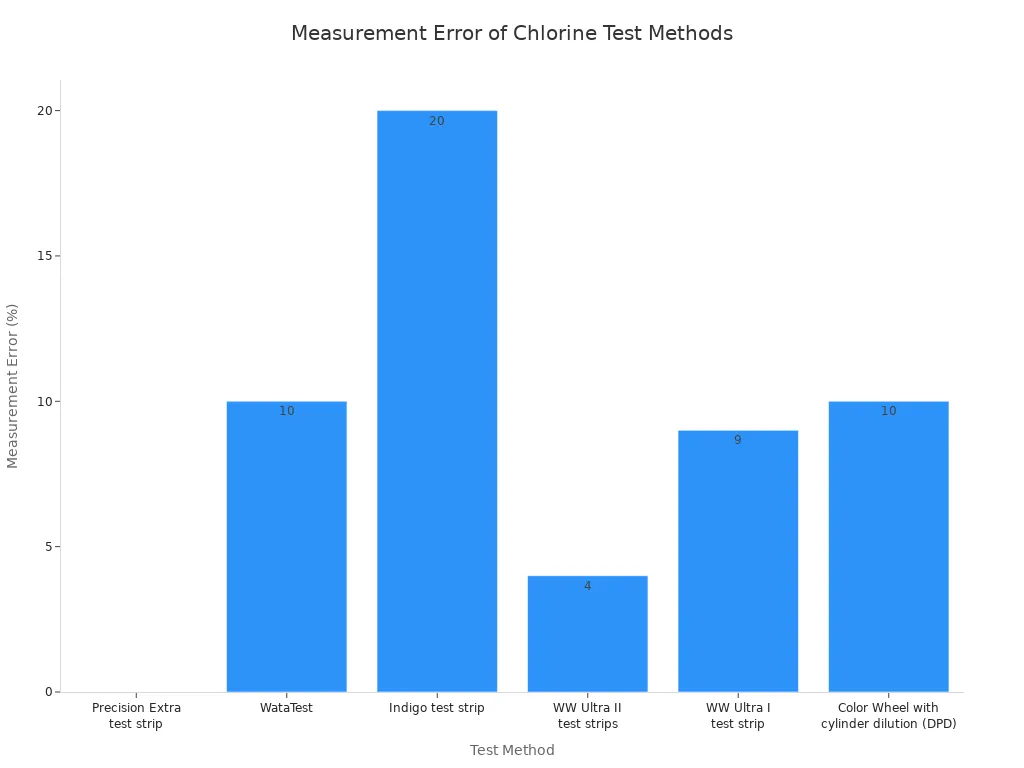
Studies show that test strips often have a high margin of error. DPD liquid tests, like those in the K-2005, consistently show better accuracy. The distinct color changes in liquid tests are easier to read than the subtle color shades on a small strip.
| Method/Test Strip | Chlorine Concentration | Measurement Error |
|---|---|---|
| Precision Extra test strip | 0.5% NaOCl solution | 0% |
| WataTest | 0.5% NaOCl solution | 10% |
| Indigo test strip | 0.5% NaOCl solution | 20% |
| WW Ultra II test strips | 0.05% NaOCl solutions | 4% |
| WW Ultra I test strip | 0.05% NaOCl solutions | 9% |
| Color Wheel with cylinder dilution (DPD) | 0.05% NaOCl solutions | 10% |
The chart below shows how much the readings can vary between different test methods. Some strips can be off by as much as 20%.
Users agree with these findings. The Taylor K-2005 kit has a 4.6-star rating from over 3,400 reviews. Many pool owners report that the kit's results are far more accurate than the test strips they used before. ✅
Real-World Cost of Inaccuracy
Inaccurate test results cost real money. A faulty reading from a test strip can lead a pool owner to add the wrong amount of chemicals. Adding too much shock or pH adjuster wastes expensive products. Adding too little fails to fix the problem. This creates a frustrating cycle of chasing the right chemical balance.
On average, a residential pool owner can expect to spend between $1,200 and $2,400 on chemicals every year. 💸
A small error from a test strip can easily lead to wasting 10-20% of that budget. An accurate kit like the K-2005 prevents this waste. Its precision ensures you add the right amount of chemicals the first time. The kit pays for itself by saving you hundreds of dollars on unnecessary chemical purchases over the life of your pool.
Is This a Water Reagent Test Kit For Drinking Water?
This is a very important question. The Taylor K-2005 is designed specifically for pools and spas. It is not a Water Reagent Test Kit For Drinking Water. The kit is certified to NSF/ANSI Standard 50. This certification is for equipment that maintains safe water in recreational environments like pools, not for testing tap water.
A user should never rely on this kit as their Water Reagent Test Kit For Drinking Water. The chemicals and parameters it measures are different. Pool kits test for high levels of chlorine and stabilizers. A true Water Reagent Test Kit For Drinking Water tests for contaminants like lead, bacteria, pesticides, and nitrates. Using a pool kit for this purpose would give you false and meaningless information. If you need to test your home's supply, you must purchase a specific Water Reagent Test Kit For Drinking Water. The K-2005 is the wrong tool for that job, so do not use it as a Water Reagent Test Kit For Drinking Water.
Is the K-2005 Worth Your Money?
Deciding on a test kit is a big step for any pool owner. The initial price of the Taylor K-2005 is higher than test strips. This makes many people wonder if the investment is justified. A closer look at its benefits, drawbacks, and alternatives provides a clear answer.
The Pros: Why Experts Recommend It
Pool professionals value accuracy above all else. The K-2005 delivers precise results that experts trust. This accuracy helps pool owners avoid the frustrating cycle of adding too many or too few chemicals. It saves money and prevents damage to pool surfaces and equipment.
Organizations like the American Swimming Coaches Association recommend Taylor test kits for their reliability. This endorsement highlights the trust that professionals place in DPD testing technology.
The kit empowers users with confidence. Instead of guessing based on a faded test strip, a pool owner gets definite numbers. This data allows for precise adjustments, leading to a consistently safe and sparkling pool. The long-term savings on chemicals often exceed the kit's initial cost.
The Cons: Potential Drawbacks
The K-2005 is not without its drawbacks. The most common issues relate to its cost, complexity, and the time it takes to perform the tests.
- Time Commitment: Using the K-2005 takes longer than dipping a test strip. A full round of tests can take 5-10 minutes. This can feel inconvenient for those used to a 30-second strip test.
- Learning Curve: Some users find the kit 'too professional' at first. Mastering the titration tests for alkalinity and hardness requires practice.
- Interference: Water chemistry can be complex. High chlorine levels or metals in the water can sometimes cause strange color changes during a test. This can confuse new users.
- Reagent Freshness: The reagents expire. Users must replace them every year to ensure accuracy. Old reagents can give false readings.
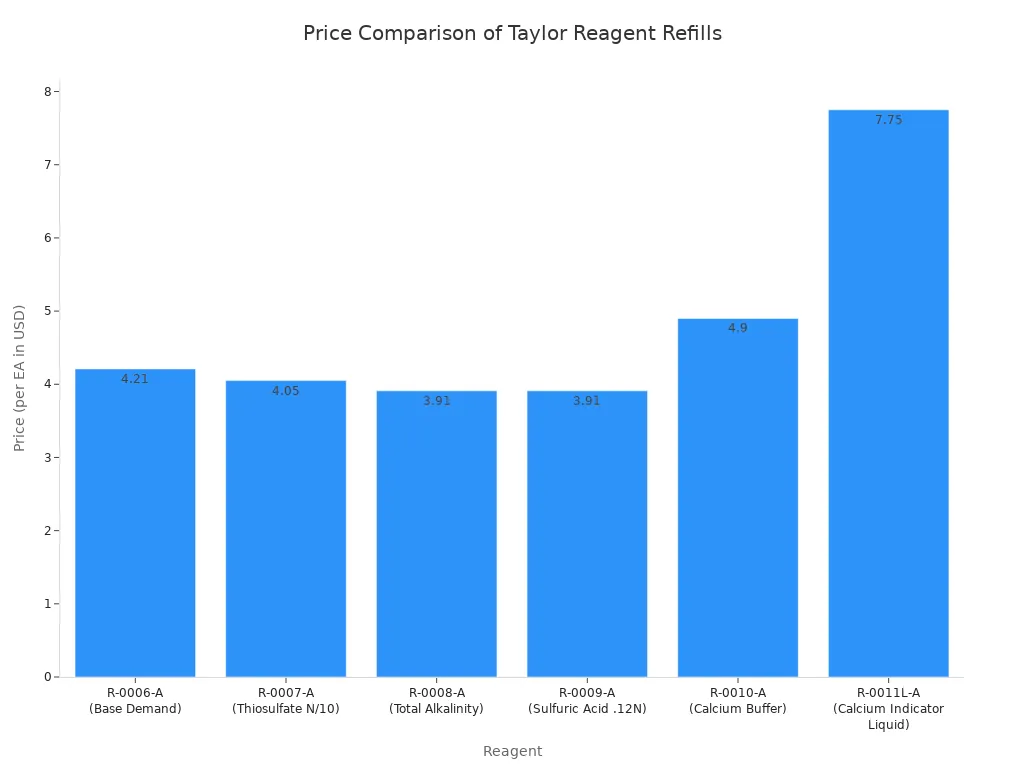
The ongoing cost of refills is another factor. While the full kit is a one-time purchase, the reagents are a recurring expense. The price for individual refills varies.
| Reagent | Price (per EA) |
|---|---|
| Taylor Reagent .75 oz., R-0006-A (Base Demand) | $4.21 |
| Taylor Reagent .75 oz., R-0007-A (Thiosulfate N / 10) | $4.05 |
| Taylor Reagent .75 oz., R-0008-A (Total Alkalinity) | $3.91 |
| Taylor Reagent .75 oz., R-0009-A (Sulfuric Acid .12N) | $3.91 |
| Taylor Reagent .75 oz., R-0010-A (Calcium Buffer) | $4.90 |
| Taylor Reagent .75 oz., R-0011L-A (Calcium Indicator Liquid) | $7.75 |
These costs can add up over a pool season, especially for those who test frequently.
The K-2006 Alternative: Do You Need It?
A common question from new buyers is about the Taylor K-2006 kit. The main difference between the K-2005 and the K-2006 is how they test for chlorine. The K-2006 includes an FAS-DPD chlorine test. This is a more precise titration test for Free and Combined Chlorine.
The K-2005 uses a color-matching comparator for chlorine. This is accurate for most residential pools. The K-2006's FAS-DPD test is even more precise. It allows users to measure chlorine levels above 5 ppm and detect very low levels of combined chlorine.
Do you need the K-2006? For most backyard pool owners, the K-2005 is perfectly adequate. However, the K-2006 is a better choice for owners of saltwater pools or those who frequently battle algae and high combined chlorine levels.
A significant complaint about the K-2005 is its lack of the FAS-DPD test. Thankfully, users can upgrade a K-2005 to K-2006 capabilities. They just need to purchase the necessary FAS-DPD reagents separately. This makes the K-2005 a great starting point with a clear upgrade path.
The Taylor K-2005 is the gold standard for residential pool owners. It offers reliable accuracy without the complexity of professional kits. While its initial cost is higher than strips, its precision saves significant money on chemicals. This kit is an essential investment for maintaining a crystal-clear, safe pool. ✅